Wow! Great professional development session with you all. I appreciate the hard work you did, and I am confident your curriculum is making great strides. I love the enthusiasm and passion you bring to your work. Your students will be the beneficiaries! Below are the powerpoint and key documents that we used for our study. Will look forward to our conversations about Visible Learners and Power Standards next month.
powerpoint
Protocol for Looking at Student Work
Saturday, February 14, 2015

Thursday, September 25, 2014
Glad to See You
It was so wonderful to see you all again--and to meet the wonderful new Grand teachers. While I won't be seeing you until February, please know I am just an email away! Contact me anytime at 1lindahenke@gmail.com.
Below are the materials that we used in our workshop in September.
powerpoint
Reviewing Your Unit
Below are the materials that we used in our workshop in September.
powerpoint
Reviewing Your Unit
Wednesday, May 7, 2014

Instructional Goals for Next Year
At our final professional development session, you reviewed the data generated from your survey of instructional practices and identified the following three areas that you would like to study further.
1. Accommodating individual differences in learning
2. Using assessment to support learning
1. Accommodating individual differences in learning
2. Using assessment to support learning
- student self assessment
- effective feedback
- authentic assessment
3. Expanding skillful use of literacy strategies
Your major focus next year in professional development will be drafting and critiquing two new units as well as reviewing the work generated this summer by each department. But you can easily begin to explore these areas in study groups and department and building meetings. These three areas can grow into major areas of study over time as your curriculum begins to come together. Studying instruction as you are designing curriculum allows you to build into your designs the best practices in supporting students' learning.
Your major focus next year in professional development will be drafting and critiquing two new units as well as reviewing the work generated this summer by each department. But you can easily begin to explore these areas in study groups and department and building meetings. These three areas can grow into major areas of study over time as your curriculum begins to come together. Studying instruction as you are designing curriculum allows you to build into your designs the best practices in supporting students' learning.
Our Most Recent Frank Winner: the Fabulous Keith WIlliams

A Wonderful Celebration of GCAA
Inspired by “I am from” by George Ella
Lyon. Created by the students of GCAA. Arranged by Cindy Kalachek.
I Am From GCAA
I am from the building that stands on Grand Avenue; a
structure that was rehabbed, reconditioned and reinvigorated to support all the
ideas that thrive inside. I study in the district surrounded by theater,
classical music and jazz, in the shadows of universities and libraries.
The Sun Theater now casts its radiance upon me. I am in awe of its
dazzling dimension yet I feel at home in the warmth of the stage lights.
I am from middle school and high school. I am from book bags, back packs, beakers and ballet barres. I am from document based questions, thesis driven essays, six-eight time, and three dimensional perspectives. I am from algebra and arabesques, from grand pianos and marble launchers. I am from Katherine Dunham, Leonardo DaVinci, and Harper Lee. I am from lab-write-ups and saxophones. I am from Shakespearean plays and Newton’s laws. I am from cylinders and sculptures and similes and scripts and soliloquies and set design and sonatas and subject- verb agreements. I am from designing, observing, tinkering, questioning, reflecting, editing and performing.
I am from teachers who are artists and artists who are teachers. I am from “5, 6, 7, 8! Write! Write! Write! Create your own ideas. Point your feet. Buenos Dias! Take out your work. Cell phones away. Here’s today’s Power Up. Open your journals. What you do in this class, you will do on the stage. Form follows function. Creative Genius.”
We will be from colleges and conservatories, apprenticeships and internships, galleries and universities, experiences locally and globally, and we stand under the stage lights, behind the canvas, in front of laptop screens, amid the designs, and next to inspiration. We are from Grand Center Arts Academy.
Sunday, March 23, 2014
Creating Group Norms Makes a Difference!
In February each of your teams set specific norms based on what you have learned about each other. As we look forward to summer work in your departments and also some interdepartmental work, do take the time to talk about what each individual brings to the group and needs from the group and build group norms to help you collaborate effectively. Below are the norms developed by your teams.
Norms for Team Dazzle
Everyone has an equal voice.
We will meet our deadlines.
We encourage and celebrate risk-taking.
We will keep the big picture in mind.
We will be sensitive to each other's needs.
Norms for Merange 6
We will value different opinions.
We will practice patience.
We will ask questions.
We will assume positive intentions.
We will take risks.
Norms for A Cubed
Start tasks on time.
Consider all ideas.
Be better than the other groups.
Follow through on expectations.
Norms for M and M's
See the bigger picture.
Acknowledge it's okay to fail.
Remember there is is an "I" in team.
Have the eagle check the checklists.
Norms for the Magnificent 7
We all have a voice.
We will be positive.
We will be open minded.
We will have a sense of adventure.
Norms for the Jet Sharks
Respect the protocols.
Hear each other.
Seek and give constructive feedback.
Respect Our Differences.
Norms for Juice
Have a team goal.
Be opened minded.
Follow through on tasks.
Listen to each others' ideas.
Do our personal BESTS!
Norms are not something you set once and then forget about. At the beginning of each session, your team should review the norms. And when the team is stuck or having difficulty, returning to the norms may help resolve the problems. Ask yourselves, "Do these standards we have set for ourselves offer insight into resolving this issue?" So often this makes a difference.
Remember to Use the Five High Impact Reading Strategies
 Remember that one of the most powerful ways to build achievement in your school is for everyone to consistently implement the high impact reading strategies. This doesn't mean everyone doing a strategy once a month--it means EVERYONE EVERY WEEK IMPLEMENTS A LITERACY STRATEGY! The strategies and worksheets are under the pages section of the Blog. Let's make this happen. Make a commitment to having an impact!
Choose one of the strategies to include in your unit and incorporate it throughout the unit.
Five High Impact Strategies
Pausing and Predicting
Writing in the Margins
Reading and Analyzing Visuals
Marking a Text
Charting a Text
February Professional Development: Moving Forward with Our Work
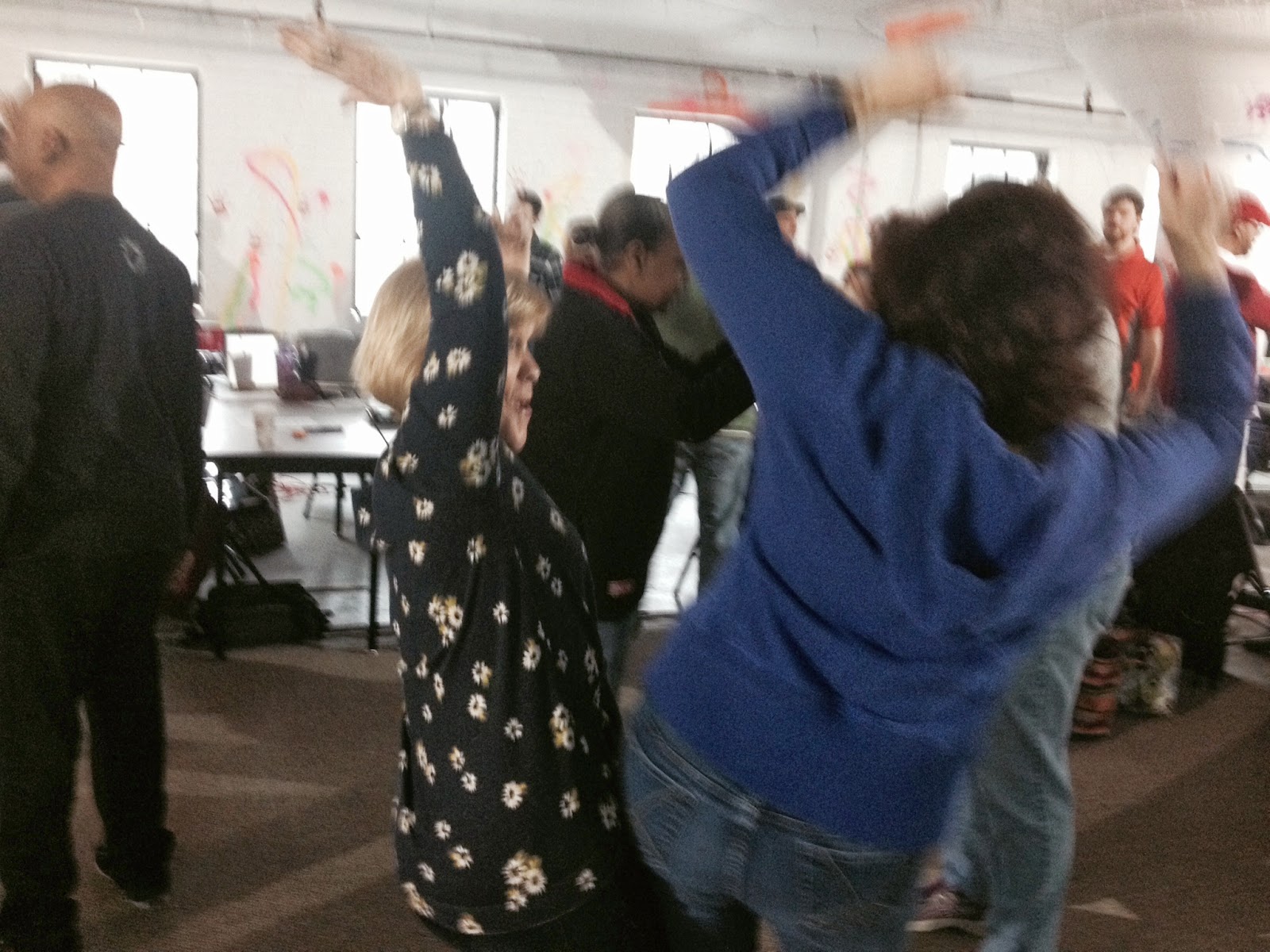


What a successful professional development session we had in February! I believe most of us saw the power of critique to improve our work. For too long teachers as a profession have worked in isolation, in large part because schools have not supported structurally opportunities for collaboration. Lynne's skillfulness in creating time for teachers to work together is making a profound difference in the culture of Grand Center.
I am hoping all of you are spending a bit of time working on the stage 3 of your units. Remember to keep in mind that the strategic placement of activities is critical to the work. This part of your work is not just a collection of activities that have to do with your topic. Make sure you are working closely with your understandings, questions, and declarative and procedural knowledge. You have promised that students will be learning these things. Are your activities clearly leading students there? Use the WHERE to shape your instruction.
W: activities to show where the unit is going.
H: activities to hook the students on the learning.
E: activities to engage students in the subject,
developing meaning and building concepts,
struggling with the essential questions, exploring the
enduring understandings, building skills and
knowledge.
R: activities to review the key work of the unit and to
correct misconceptions.
E: activities built into the unit to allow teachers to
formative assessments.
The Ladder of Inference in the Classroom

 Amber found a wonderful way to help her students explore point of view using the ladder of inference. Here are her comments.
I just wanted to share a couple examples of ladders of inference
my students did in class as part of our “To Kill a Mockingbird” unit. I
introduced the ladder and gave them an example using a character from the book.
They then read an article about the Trayvon Martin case and created their own
in groups. They could choose to write it from George Zimmerman’s perspective or
from their own perspective on the case. I thought they turned out pretty good!
Obviously, we tied it into themes about race and justice and they connected it
to Tom Robinson. Today, they had to do another one related to a character in
the book, and I’m going to have them do one on themselves at the end.
Tuesday, February 11, 2014
A BIG SHOUT-OUT TO OUR CURRENT FRANK WINNER
 Connie Rich demonstrated that with solid design a unit on the Spanish subjunctive can be highly engaging to teenagers. Make sure you ask to see her unit and give her a pat on the back!
Have you designed today?
Wednesday, January 22, 2014
So Proud of Grand Center Arts Center Art Academy
VIDEO
So proud of you all. This video is absolutely fabulous. It captures so beautifully the work you are doing here. Congratulations.
So proud of you all. This video is absolutely fabulous. It captures so beautifully the work you are doing here. Congratulations.
Monday, January 13, 2014
December Professional Development Session Was Highly Successful!
 |
| I could not have been more pleased with our work in December. Almost everyone is far along in the creation of an assessment package for units, and the quality is extremely high. If you have not yet sent me your assessment package for your unit, please do so! |
Tuesday, December 10, 2013
Rhino Competition Heats Up

Carol York's Holiday Gift to Us
Below is a letter from Carol that reinforces the student-centered focus so critical in successful schools.
Something pretty special happened to me last week. I know this doesn’t exactly fit with designing lesson plans but I wanted to share this antidote because it’s about what’s really important; it’s all about the kids. I don’t know how to send things to your blog so I’m sending you this email. As we work through our lesson plans and common cores and national standards, we need to be mindful of how we interact with the students and that this is equally, if not more important. One can have the best lesson plan but if the teacher can’t reach the child, what’s the point. My story is not about me, but about another teacher who took the opportunity to make a connection with a student.
To set the stage, I’m involved in a yearlong STEM PD. During these sessions, a big emphasis is placed on the importance of affirmations and how it must be incorporated into the classroom. Sitting in the session, I would listen but, honestly, it seemed a bit to contrived for my taste. On Wednesday, I had a full day PD session.
Here’s the story: Tuesday I took my students on a field trip to a nature center. An adult leader there was impressed with the questions one particular student was asking. She told the student, Dashavia, that she has the mind of a scientist and could have a great career in science. The instructor mentioned this conversation to me as well. Wednesday, I was at the STEM PD and had a sub. When I returned to school on Thursday, one particular class complained about the sub saying this, that and the other thing. I didn’t think too much about it, until they said “and she told Dashavia that she was going to go to jail”. That caught my attention. This young lady can be talkative and show a bit of attitude but jail? Really? I thought of what was said to her at the field trip and took the opportunity to say, in front of the class, “Dashavia, what did the teacher say to you on the field trip?” With a big smile, she said “I’m going to make a great scientist”. I nearly cried. I told her “the only way you’ll go to a jail is if you’re doing some scientific research there”. This got a big laugh from the class and Dashavia was obviously happy. I am so thankful to that instructor. I will thank her and relay this story to her. And, you can bet that that sub. is never welcome back in my class.
What we say can have a huge impact on a child. As we plan our lessons, we need to be constantly mindful of not only what we teach, but what we say when teaching. I realize this particular example would not have been written in to a lesson and would not have been as effective if it had. But we should keep, in our ever expanding tool box, ways in which we can support a student (child) as they grow and move on. I don’t know what’s in store for Dashavia or even if she’ll remember this particular detail of her 6th grade year. But I believe she will remember a warm feeling that someone thought she was pretty special.
Carol York
Monday, October 28, 2013
Send Me Your Stage One's for Feedback

Several of you have sent me your Stage One's for feedback, and I would love to see additional units. Please take this opportunity to get some feedback on your unit. Remember, my email is 1lindahenke@gmail.com. Also, Jay McTighe has put together a terrific collection of websites to help with Stage One. Access that useful resource in the Pages section of the blog.
Having Questions about Essential Questions?

If you are struggling with drafting your essential questions, there are lots of resources out there that can help you.
Grant Wiggins discusses essential questions in this short video: video There is also an essential question exchange that might help get a stuck mind moving. You can find that here: exchange
Jay McTighe and Grant Wiggins have a brand new book out about essential questions that is really good...and you can access the spectacular first chapter that gives all kinds of examples of essential questions in various content areas and a wonderful description of what makes a question essential right here: book.
Still questioning questions? Email me: 1lindahenke@gmail.com
Thursday, October 17, 2013
Developing Curriculum In Essential Schools
I have posted a great article on curriculum design in Essential Schools. While they do not use UbD, there are tremendous similarities in the way they think about curriculum and the work Grand is doing. Please take the time to read it and think about what designing curriculum means for the school, for your department, and for you as a professional. How would your life be different if your class was governed by a textbook only? I would also encourage you to revisit the learning principles Grand teachers developed during the first two days of our work. Those are also posted here.
Subscribe to:
Posts (Atom)